Belgium
Canals, dunes and the sea. Your schedule included.
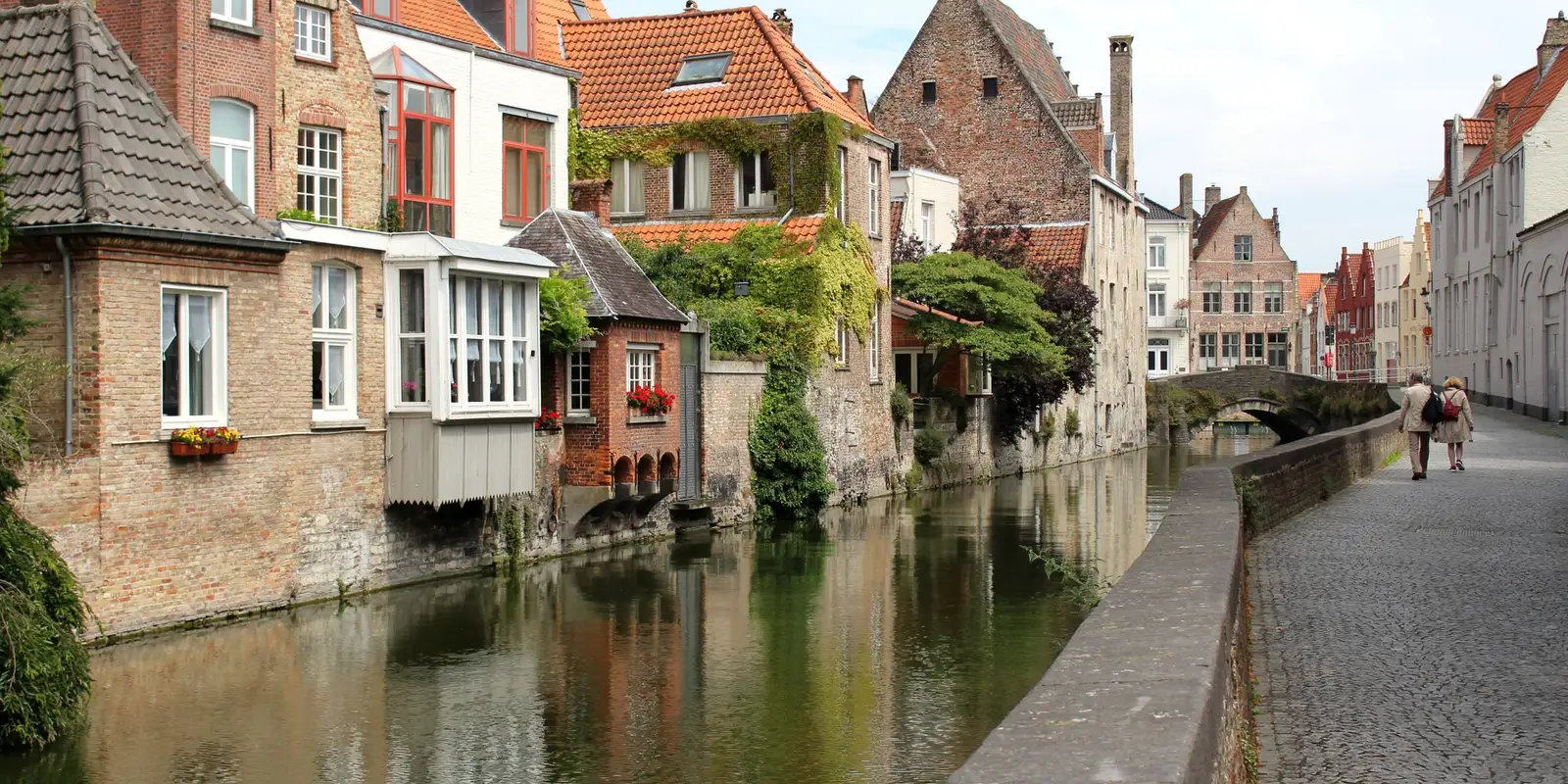
Bruges is one of the best preserved medieval cities in Europe, a web of canals, brick gables and market squares in the province of West Flanders. Just beyond it lies the Belgian coast: a single, gentle stretch of North Sea beaches, dunes and seaside towns, from De Panne near the French border to Knokke-Heist near the Dutch one. The two make an easy pairing for a trip, a few days of city walks and a few days of sea air, and both have dialysis centres within a short train ride of each other. Whether you are planning a long weekend in Bruges or a summer week in Ostend, you can keep your treatment schedule and still enjoy the trip.
Reni coordinates your dialysis while you travel. We list the dialysis centres we can find in Bruges and along the coast. Tell us where and when, and we contact the centres for you, follow up until one confirms your sessions, and help you plan the rest of the trip. The centre provides your treatment, and you book your travel directly with each provider. Finding a centre and arranging your sessions with it is free, and we share your details with a centre only with your consent.
Getting your sessions sorted comes down to five steps:
The centres we list in this area are hospital dialysis units, and each centre sets its own rules for visiting patients: how much notice it needs, which documents it asks for and how it handles payment. Expect to deal with a hospital administration rather than a small private clinic, and expect paperwork before your first session.
When we last reviewed this guide, our directory listed centres in the places below. The list further down this page comes straight from the directory, so check it for the current centres.
A typical routine is three sessions a week of around four hours each, but your schedule is a matter for you and the centre. We don't give medical advice; our job is to help you find the centre and make contact.
AZ Sint-Jan in Bruges told us how it handles holiday patients. This is that centre's own policy, not a rule for every Belgian unit:
Centres typically ask visiting patients for the same core set of documents. Gathering these before you leave is one of the most important things you can do:
How recent your blood and virology results must be is set by the centre that will treat you, and it differs from one centre to another. Ask that centre what it needs, then ask your nephrologist or home unit to arrange the tests to match. If the centre sends you forms, fill them in and return them before you travel.
Requirements vary by centre, so confirm the exact list when you make contact, and allow time to gather paperwork from your home unit before you travel.
Three airports serve the area, along with the train network:
By train, Bruges is about an hour from Brussels on a direct service via Ghent. From Bruges, Ostend is around 15 minutes by train and Knokke around 16 to 20 minutes. Eurostar takes about two hours from London to Brussels. Once on the coast, the Kusttram, run by De Lijn, links every resort along roughly 67 km of shoreline, from De Panne to Knokke-Heist, and it is one of the longest tram lines in the world.
The coast is at its busiest in July and August, with the peak usually falling between 21 July and mid-August. Bruges draws visitors all year, and late November to early January brings its Christmas market and winter light trail. At least one Bruges centre runs a reduced schedule in Christmas week.
The golden rule: get your sessions confirmed in writing before you book flights or trains. Some Belgian centres ask international patients for around six weeks' notice, so don't leave it until the last minute.
Treat your dialysis arrangement with the same urgency as your travel: inquire early, aim for at least six weeks ahead, and keep a backup centre in mind.
Availability, what to bring, languages spoken and any costs can all change, and they differ from centre to centre. Always confirm the details directly with the centre before you book flights or treatment. We list centres and keep their contact details as current as we can, but we are not affiliated with them and cannot confirm availability on their behalf.
Yes. The area has dialysis centres, and at least one centre in Bruges has told us it takes holiday patients. Contact a centre directly using the details below to ask about availability and what to bring. Or send us your dates through the inquiry form and we contact the centre for you, only with your consent.
Some Belgian centres ask international patients for around six weeks' notice, and the coast is at its busiest in July and August. Inquire as early as you can and confirm your slots in writing before you book travel.
Belgium is in the EU, and an EHIC/GHIC can cover medically necessary treatment during a temporary stay. Holiday dialysis arrangements, and any cost, depend on the centre and your situation. Always confirm directly before you travel.
Our directory lists centres in Bruges (Brugge), Knokke-Heist and Ostend (Oostende). The list below comes from our directory and shows each centre's contact details.
Browse centres by country and city, then send an inquiry. We forward it only with your consent. No booking, no fee, no medical advice.